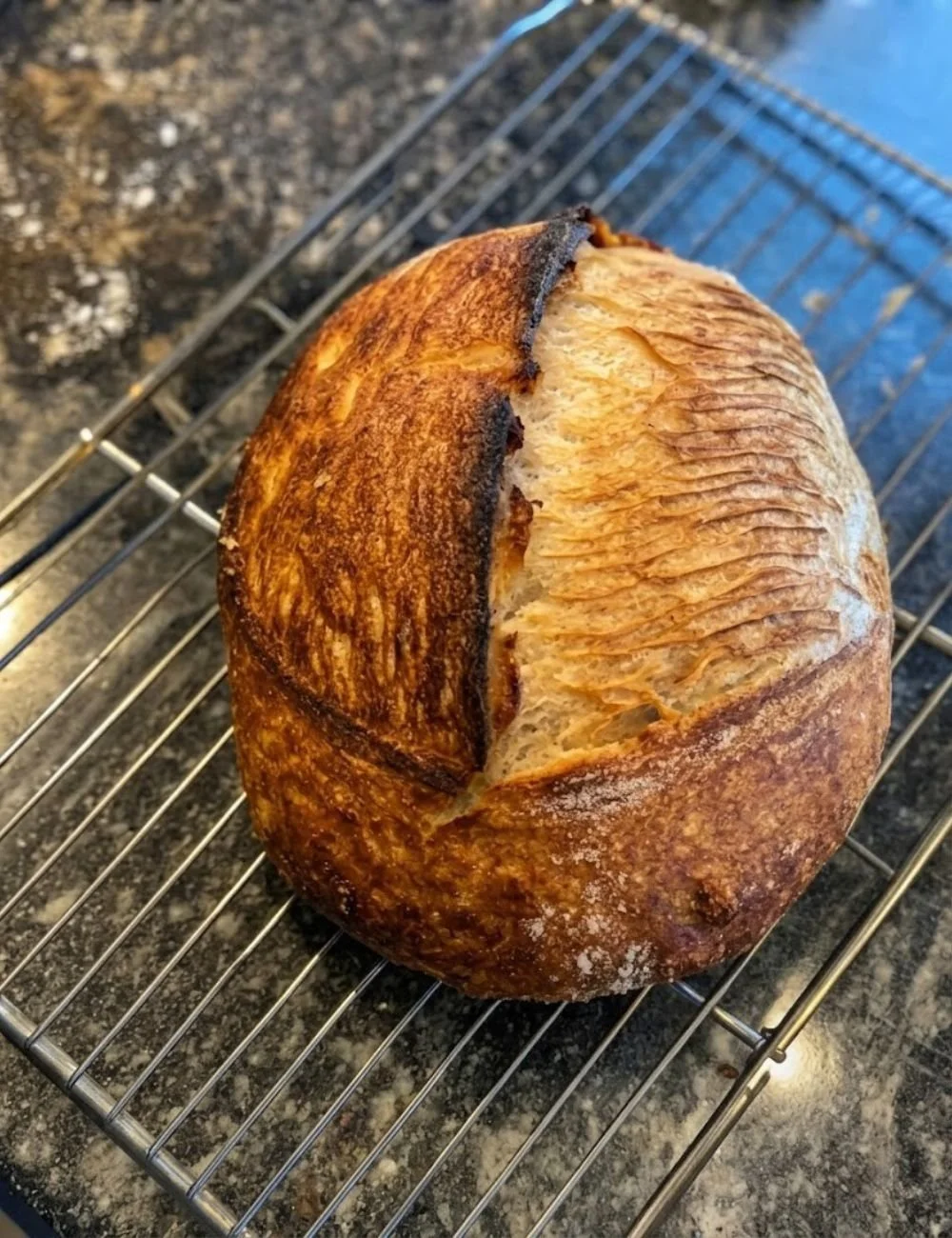
This lazy no-bulk-fermentation sourdough makes a crisp, golden crust and a tender, open crumb with very little hands-on time. It smells warm and yeasty while baking and tastes mildly tangy, with a chewy texture and a soft interior. This method skips long bulk folds and fits easily into a busy day. If you enjoy quick sourdough ideas, you might also like this blueberry lemon cream cheese sourdough bread for a sweeter twist.
Recipe Information
- Prep Time: 5 hours (includes 30 min rest + 4–6 hour rise; active hands-on ~20 minutes)
- Cook Time: 45 minutes
- Total Time: 5 hours 45 minutes
- Servings: 10 slices
- Difficulty Level: Easy
Nutrition Information
(Approximate per serving, based on 10 servings)
- Calories per serving: 200 kcal
- Protein: 6.6 g
- Carbohydrates: 42 g
- Fat: 0.8 g
- Fiber: 1.9 g
- Sugar: 1 g
- Sodium: 393 mg
Why Make This Lazy Baker’s No-Bulk-Fermentation Sourdough Bread
This recipe saves time and fuss. You get real sourdough flavor without long shaping sessions or repeated folds. The dough develops flavor during the single rise, giving a light tang and an airy crumb. It’s perfect for weeknights or when you want fresh bread with minimal steps. The crust browns nicely in a Dutch oven and the inside stays moist and chewy.
How to Make Lazy Baker’s No-Bulk-Fermentation Sourdough Bread
This method uses an autolyse, a single gentle rise, and straightforward shaping. You’ll handle the dough only a few times. The steps below guide you from mixing to cooling with simple, clear actions.
Ingredients:
- 500g bread flour
- 350g water
- 100g active sourdough starter
- 10g salt
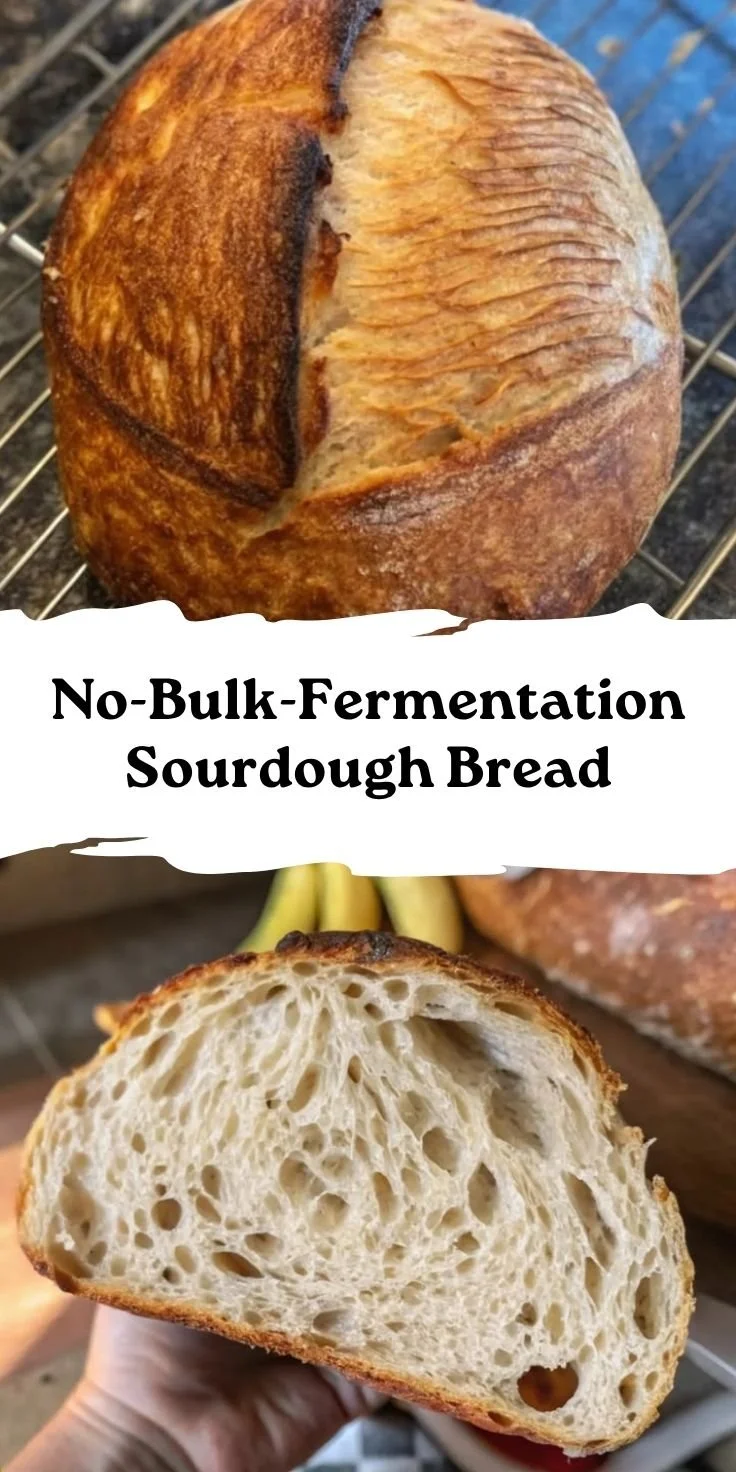
Directions:
Step 1: Preparation
In a large mixing bowl, combine the bread flour, water, and active sourdough starter. Stir until no dry flour remains. Cover and allow the dough to rest for 30 minutes to autolyse. This rest hydrates the flour and starts gluten development without kneading.
Step 2: Mixing
After the autolyse, add the salt and mix well, ensuring it’s fully incorporated. Use wet hands to fold and squeeze the dough until the salt feels evenly distributed. Shape the dough into a round ball and place it back in the bowl. Cover and let it rise, covered, at room temperature for about 4–6 hours, until it puffs and shows small bubbles. No bulk folding is required; a gentle fold halfway through the rise can help if you want more structure.
Step 3: Cooking
Preheat your oven to 450°F (230°C) with a Dutch oven inside. Once the dough has risen, gently shape it into a tight ball and place it in a parchment-lined proofing bowl or bowl dusted with flour. Carefully transfer the dough (on the parchment) to the preheated Dutch oven. Cover with the lid and bake for 30 minutes to trap steam and set the crust. Remove the lid and bake for an additional 15–20 minutes until the crust is deep golden brown and crackly.
Step 4: Finishing
Remove the bread from the Dutch oven and let it cool on a wire rack for at least 1 hour before slicing. Cooling finishes the crumb set and improves flavor. Slice thin or thick and enjoy the warm aroma, crunchy crust, and soft interior.
How to Serve Lazy Baker’s No-Bulk-Fermentation Sourdough Bread
Serve warm with butter to highlight the crust and crumb. It pairs well with soups, roasted vegetables, eggs, and cheese. For sandwiches, let the loaf cool fully so slices hold together. Try toasting slices for avocado toast or serving with olive oil and herbs for dipping.
How to Store Lazy Baker’s No-Bulk-Fermentation Sourdough Bread
- Room temperature: Keep whole or sliced in a paper bag or loose bread bag for up to 2 days to preserve crust texture. Avoid airtight containers that soften the crust.
- Freezer: Slice and freeze in a freezer bag for up to 3 months. Toast or thaw slices directly from frozen.
- Refrigerator: Not recommended for storage — it dries bread faster. Only refrigerate if you have to, and plan to use within 2 days.
Expert Tips for Perfect Lazy Baker’s No-Bulk-Fermentation Sourdough Bread
- Starter strength: Use an active starter fed 4–8 hours before baking for reliable rise.
- Hydration: 350g water (70% hydration) gives a soft, slightly sticky dough that bakes into an open crumb.
- Handling: Wet your hands to reduce sticking while mixing and shaping.
- Shaping: Create tension on the surface by cupping the dough and rotating it toward you to form a round boule.
- Steam: Baking in a Dutch oven traps steam. If you don’t have one, use a roasting pan with a tray of hot water to add steam.
- Temperature: If your kitchen is cool, allow a longer rise; if warm, check earlier. Dough should be puffy and aerated, not doubled exactly.
- Scoring: Score the dough just before baking to control expansion and create a pretty pattern.
- Crust: For a shinier crust, spritz the dough lightly with water before scoring.
Delicious Variations
- Olive & Herb: Add 60–80g chopped olives and 1 tbsp chopped rosemary to the dough during mixing.
- Seeded: Fold in 80g mixed seeds (sunflower, flax, sesame) after the autolyse for a nutty texture.
- Whole Wheat Hybrid: Replace 100g bread flour with whole wheat for a heartier loaf. Increase water by 10–20g if needed.
- Garlic & Cheddar: Mix in 60g grated cheddar and 1–2 tsp garlic powder before the rise for a savory loaf.
- Sweet Twist: Add 50–75g dried fruit and 30g sugar for a slightly sweet, breakfast-friendly sourdough (watch rise times; sugar can speed fermentation).
Frequently Asked Questions
Q: Can I shorten the rise time?
A: Yes. If you need the loaf faster, place the dough in a warm spot (around 75–80°F / 24–27°C). The rise will speed up, but the flavor will be less developed. Check the dough often; you want it noticeably puffed with bubbles.
Q: How do I know when the dough is ready to bake?
A: Look for a puffy dough with small surface bubbles and a light jiggle. You can do a gentle poke test: if the indentation slowly springs back but leaves a small mark, it’s ready.
Q: My loaf is dense. What went wrong?
A: Dense bread often comes from underproofing, weak starter, or low oven heat. Ensure the starter is active, give enough rise time, and preheat the Dutch oven fully. Also avoid overhandling the dough.
Q: Can I use all-purpose flour instead of bread flour?
A: Yes. The loaf will still work but may have a slightly softer structure and less chew. If using all-purpose, the texture will be fine for most uses.
Q: Do I need a Dutch oven?
A: It helps produce the best crust by trapping steam. If you don’t have one, use a heavy roasting pan and add a tray of boiling water to the oven for steam, or bake on a preheated baking stone.
Q: Can I halve or double the recipe?
A: Yes. Keep ingredient ratios the same. Adjust baking time slightly if the loaf size changes; smaller loaves bake faster.
Q: Is refrigeration of the dough an option?
A: You can retard the dough in the fridge for a slower, overnight rise (8–18 hours) to deepen flavor. Bring the dough back to room temp for 30–60 minutes before baking if needed.
Conclusion
This lazy, no-bulk-fermentation sourdough gives great flavor, a crunchy crust, and a soft crumb with minimal effort. It fits busy schedules and still produces a beautiful loaf you’ll enjoy with meals or as toast. Try it once, then experiment with the variations and tips to make it your own—happy baking!
Print
Lazy Baker’s No-Bulk-Fermentation Sourdough Bread
- Total Time: 390 minutes
- Yield: 10 slices 1x
- Diet: Vegetarian
Description
A quick and easy sourdough bread recipe that skips long fermentation, yielding a crisp crust and tender crumb.
Ingredients
- 500g bread flour
- 350g water
- 100g active sourdough starter
- 10g salt
Instructions
- Combine the bread flour, water, and active sourdough starter in a large mixing bowl. Stir until no dry flour remains. Cover and rest for 30 minutes.
- Add the salt after the autolyse and mix until fully incorporated. Shape into a ball and let rise for 4–6 hours until puffy and bubbly.
- Preheat the oven to 450°F (230°C) with a Dutch oven inside. Shape the risen dough into a tight ball and transfer it to the preheated Dutch oven.
- Bake for 30 minutes covered, then 15–20 minutes uncovered until the crust is golden brown.
- Cool the bread on a wire rack for at least 1 hour before slicing.
Notes
Serve warm with butter or for sandwiches. Store in a paper bag for up to 2 days or freeze for 3 months.
- Prep Time: 345 minutes
- Cook Time: 45 minutes
- Category: Bread
- Method: Baking
- Cuisine: American
Nutrition
- Serving Size: 1 slice
- Calories: 200
- Sugar: 1g
- Sodium: 393mg
- Fat: 0.8g
- Saturated Fat: 0g
- Unsaturated Fat: 0g
- Trans Fat: 0g
- Carbohydrates: 42g
- Fiber: 1.9g
- Protein: 6.6g
- Cholesterol: 0mg