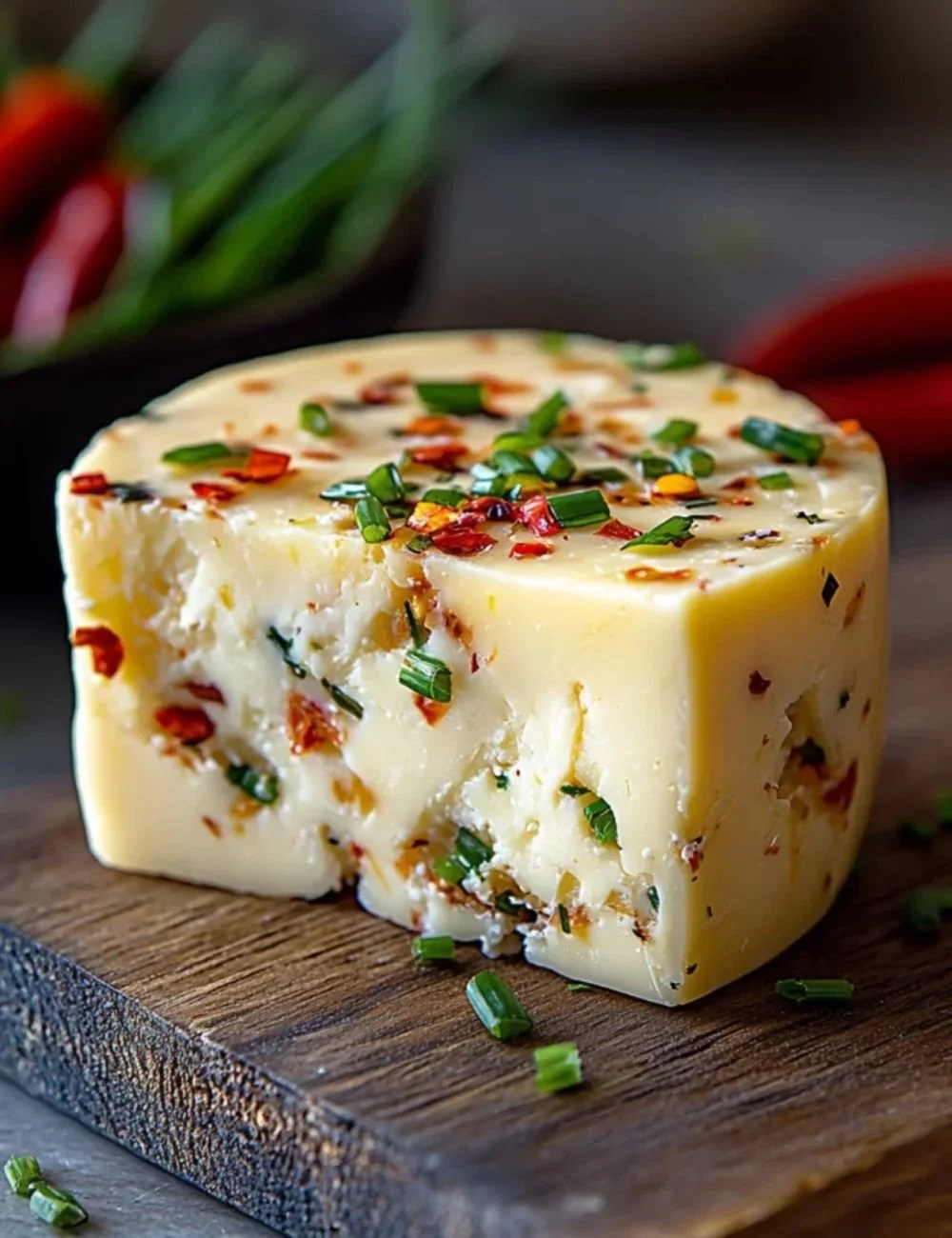
Homemade Pepper Jack Cheese is creamy, a little tangy, and warms the back of your throat with bright jalapeño heat. It slices and melts beautifully, offering a soft, slightly springy texture and flecks of green and red from peppers. This approachable recipe gives you control over the spice level and produces a fresh, flavorful cheese perfect for sandwiches, tacos, melting over vegetables, or snacking. For a quick meal idea that uses pepper jack, try a complementary pasta recipe I like: creamy pepper jack chicken sausage pasta.
Recipe Information
- Prep Time: 30 minutes (active)
- Cook Time: 4 hours (includes pressing time)
- Total Time: 4 hours 30 minutes
- Servings: 16 (about 1 oz / 28 g per serving)
- Difficulty Level: Medium
Nutrition Information
- Calories per serving: 110 kcal (approx.)
- Protein: 7 g
- Carbohydrates: 1 g
- Fat: 9 g
- Fiber: 0 g
- Sugar: 0.5 g
- Sodium: 180 mg
Why Make This Homemade Pepper Jack Cheese
Making pepper jack at home gives you fresh flavor and control. You choose how hot it gets, how firm it becomes, and what peppers to include. Freshly made cheese smells milky and tangy, tastes rich and slightly spicy, and shows a creamy, smooth texture with colorful pepper bits. Homemade cheese also avoids additives and lets you experiment with texture and aging.
How to Make Homemade Pepper Jack Cheese
This method uses simple cheesemaking steps: culture, coagulation, cutting curds, cooking, draining, adding flavor, pressing, and a short age. You’ll work with low heat and gentle stirring. Keep equipment clean and use a reliable thermometer. The final wheel will be semi-firm and sliceable after a few days of resting; it gains flavor as it ages.
Ingredients:
- 1 gallon whole milk
- 1/4 tsp mesophilic starter culture
- 1/4 tsp liquid rennet
- 1/2 tsp salt
- 1–2 jalapeño peppers, chopped (seeds in for more heat, seeds out for milder)
- 1/4 tsp crushed red pepper flakes (optional)
Directions:
Step 1: Preparation
Heat the milk in a large, heavy-bottomed pot over medium heat. Stir gently and monitor with a thermometer. Stop heating once the milk reaches 85°F (29°C). Sprinkle in the 1/4 tsp mesophilic starter culture and stir gently to mix. Let the starter rehydrate and work for 2 minutes.
Step 2: Mixing
Add 1/4 tsp liquid rennet to the milk and stir in a smooth motion for about 20–30 seconds. Then stop stirring and let the milk sit undisturbed for 30–60 minutes, until it forms a clean, solid curd (a clean break when you cut it).
Step 3: Cooking
Using a long knife or curd cutter, cut the curd into small cubes. Let the cut curds rest for 5–10 minutes. Gently heat the curds while stirring slowly, raising the temperature to 105°F (40°C). Keep the curds moving to prevent matting. Once at temperature, remove the pot from the heat and allow curds to settle to the bottom for a few minutes.
Step 4: Finishing
Carefully drain off the whey and rinse the curds with cool water to wash surface whey (this firms the curds slightly and cools them). Transfer curds to a bowl and add 1/2 tsp salt, the chopped jalapeños (1–2 peppers to taste), and 1/4 tsp crushed red pepper flakes if using. Mix evenly. Pack the curds into a cheese mold and press them with moderate pressure for a few hours until the wheel is consolidated and excess whey is expelled. Remove the cheese from the mold and let it air dry, then age in a cool place (50–55°F / 10–13°C) for a few days to develop flavor before consuming. Refrigerate after initial aging.
How to Serve Homemade Pepper Jack Cheese
Serve pepper jack at room temperature for the best flavor and melt. Slice thin for sandwiches, shred to top nachos or chili, or cube for snacking and party boards. It melts smoothly for quesadillas, grilled cheese, and mac and cheese. Pair with crusty bread, pickles, cured meats, or crisp apples to balance heat and creaminess.
How to Store Homemade Pepper Jack Cheese
Wrap the cheese in wax paper or cheese paper, then place it in a loose plastic bag or airtight container. Store in the refrigerator at 34–40°F (1–4°C). Properly wrapped, it will keep for 3–4 weeks. For longer storage, vacuum-seal and refrigerate up to 2 months or freeze for up to 3 months (texture may change slightly after freezing). Always let refrigerated cheese come to room temperature 20–30 minutes before serving.
Expert Tips for Perfect Homemade Pepper Jack Cheese
- Use pasteurized whole milk for consistent results; raw milk can vary and requires care.
- Keep the thermometer handy. Small temperature changes affect curd texture.
- Stir gently to avoid breaking curds too fine; medium-sized curds give a good texture.
- Adjust jalapeño quantity and whether you include seeds to control heat.
- Salt after draining for even distribution; salt levels can be adjusted to taste.
- Press gradually: start with light pressure and increase to avoid trapped whey.
- Age a few days to mellow flavors; one to two weeks in the fridge deepens taste.
- If you want less moisture, press longer or age longer in a cool, humid place.
Delicious Variations
- Smoked Pepper Jack: Cold-smoke the pressed wheel for 2–4 hours for a smoky note.
- Garlic & Herb: Add 1–2 tsp minced roasted garlic and 1 tbsp chopped chives or chervil.
- Cheddar-Pepper Blend: Mix in a small amount of grated mild cheddar curds for a sharper bite.
- Mild Pepper Jack: Use only the pepper flesh (no seeds) and a single jalapeño for subtle heat.
- Habanero Jack: Substitute finely diced habanero (use gloves) for much stronger heat and fruity notes.
Frequently Asked Questions
Q: How much cheese will 1 gallon of milk make?
A: One gallon of whole milk yields roughly 1 to 1.25 pounds of semi-hard cheese. Yield varies with milk quality and how much whey you expel.
Q: Can I use low-fat or skim milk?
A: Low-fat and skim milk produce much drier, crumbly cheese and lower yield. Whole milk gives the best creamy texture for pepper jack.
Q: Do I have to age the cheese?
A: You can eat it after a few days of drying and mild aging, but a short age (3–7 days) improves flavor and texture. Longer aging firms and deepens flavor.
Q: How can I reduce the cheese’s saltiness?
A: Reduce the added salt slightly. Also taste after pressing and aging; flavors mellow over time. Rinsing curds removes surface salt but also reduces flavor.
Q: What if my curd never sets?
A: Check rennet freshness and measurement. Ensure milk wasn’t heated beyond recommended temperature before adding starter. Warm to the right temperature and allow full time undisturbed for the curd to form.
Q: Can I use other peppers?
A: Yes. Fresno or poblano give different heat and flavor. Habanero adds fruitiness but more heat; remove seeds to control spice.
Q: Is it safe to skip the starter culture?
A: The starter acidifies milk and improves flavor and texture. Skipping it risks poor set and off flavors. Use the recommended mesophilic starter.
Conclusion
Making your own pepper jack is rewarding: you control heat, salt, and texture while enjoying the fresh, creamy taste and spicy aroma. It’s great for melting, snacking, and adding a zesty kick to meals. For inspiration on how to use this cheese in a quick pasta dish, see this pepper jack resource: pepper jack cheese – Jennifer Murch. Give it a try — the first bite of warm, homemade pepper jack is wonderfully satisfying.
Homemade Pepper Jack Cheese
Ingredients
- 1 gallon whole milk
- 1/4 tsp mesophilic starter culture
- 1/4 tsp liquid rennet
- 1/2 tsp salt
- 1–2 jalapeño peppers, chopped (seeds in for more heat, seeds out for milder)
- 1/4 tsp crushed red pepper flakes (optional)